
Coffee Talk: Tokyo Review
“New blend, same great taste.” Written by: Hunter (@ReaperHunter23)
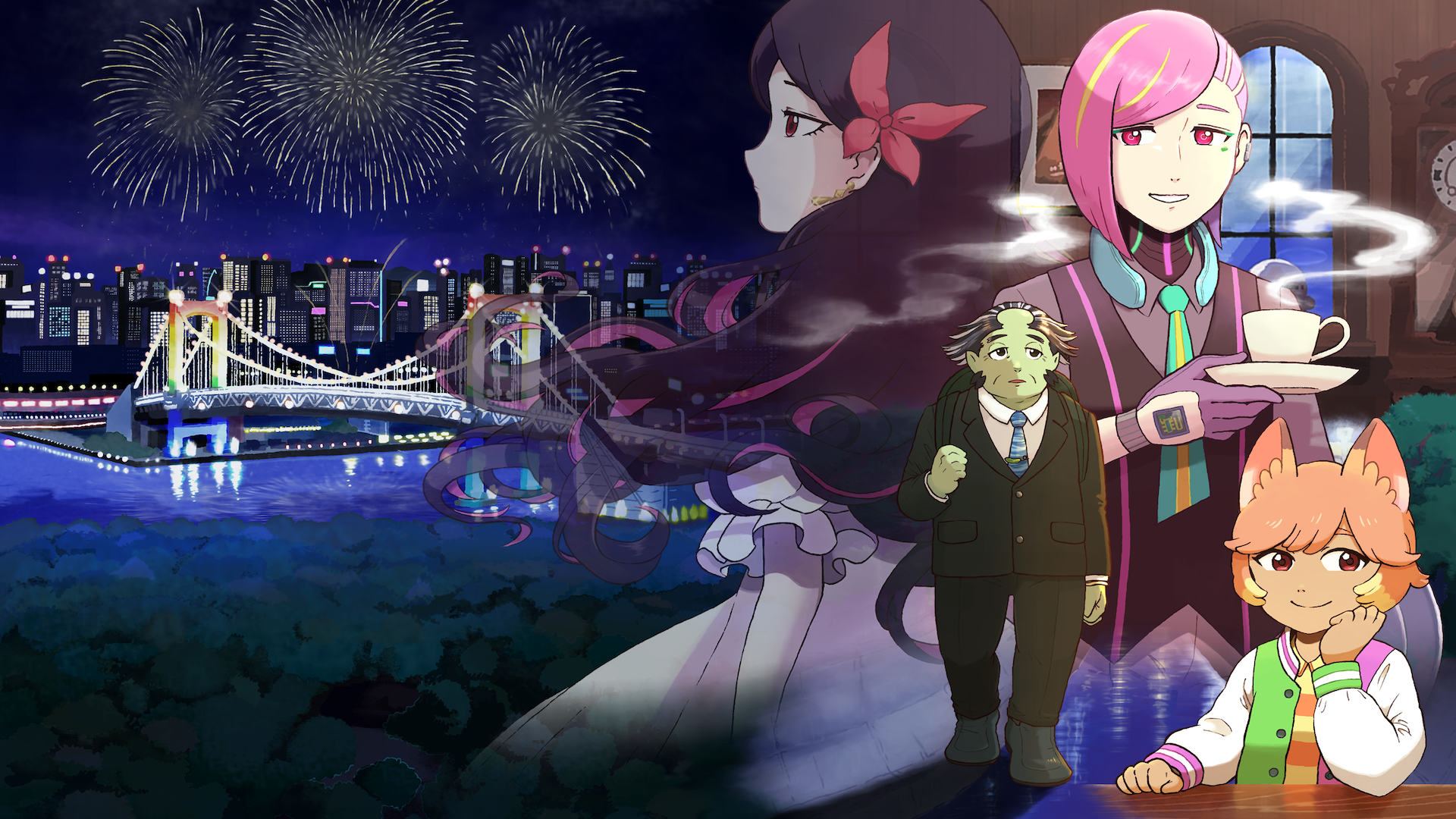
I love the Coffee Talk games. They have an easygoing premise with a pleasing atmosphere that makes it all a very comforting experience. When I finished Hibiscus And Butterfly, I said something to the effect of : “I could come back to this series once every few years.” Sure enough, when Coffee Talk: Tokyo was announced, I was eager to see what the game had in store. The idea of being in a new location and thus having a different skew of mythical folk to interact with was more than enough to maintain my curiosity. So let’s have a look to see what kind of story Coffee Talk: Tokyo managed to brew up.
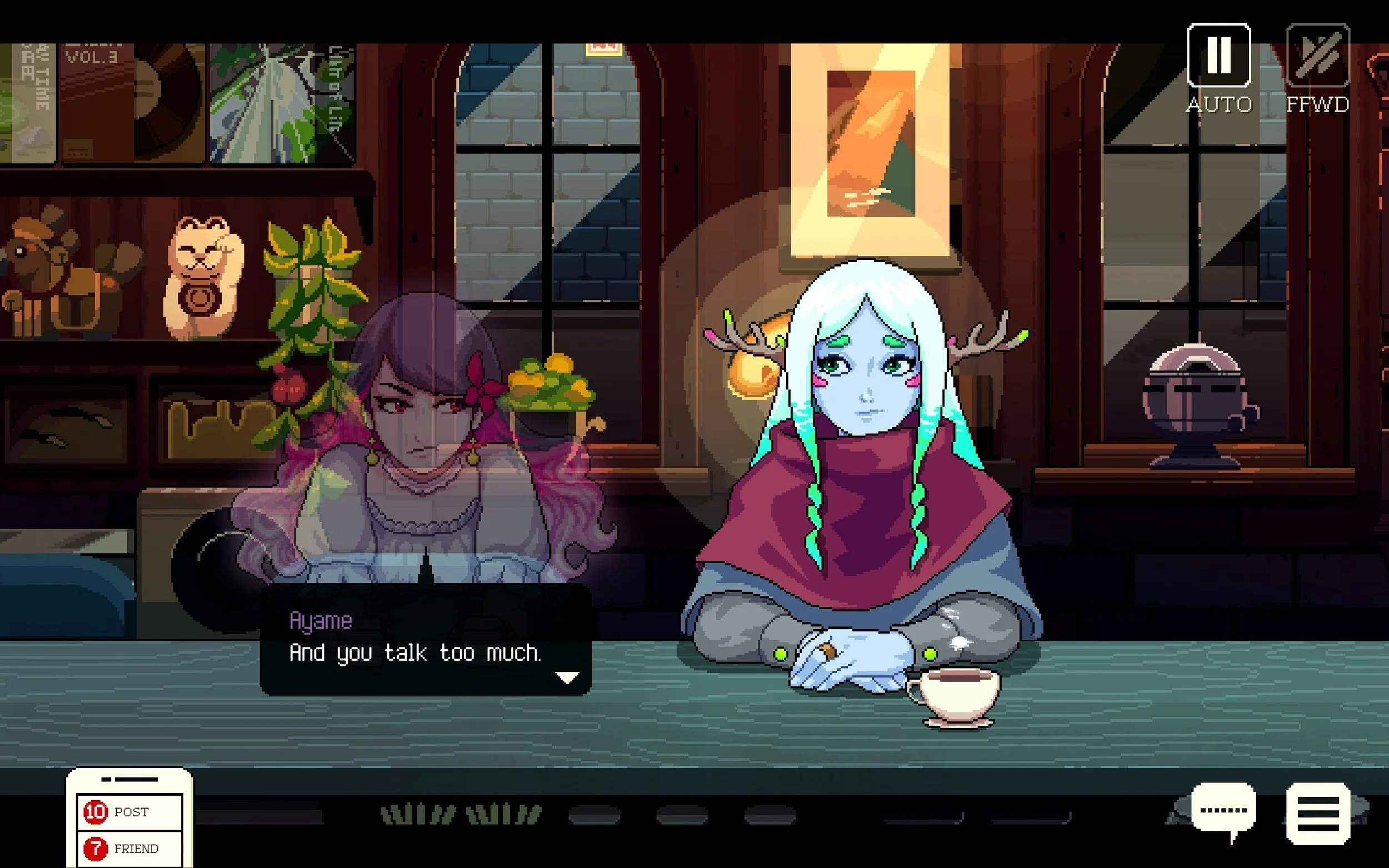
Image Credit: Toge Productions, Chorus Worldwide
Coffee Talk: Tokyo takes place a few years after Hibiscus and Butterfly. As the name implies, it’s a brand new location with a seemingly brand new Barista. One of the more prominent characters in the game is the Barista’s assistant, Vin. I really enjoy the dynamic between Vin and the Barista. It is a different dynamic than even the most familiar rapports that were seen in the prior games. Tokyo Barista pretty often maintains the cool and mysterious vibe that would be expected if you’ve played the other games, but interactions with or pertaining to Vin are much less guarded.
Coffee Talk: Tokyo really captures the “Day in the life” kind of feel in its story. Most of the cast were already regulars of the store before the start of the game. I found this to be pretty helpful to making the interactions between the customers and The Barista feel fairly organic.
The cast in this game is pretty great. The way that the different interactions overlap and bounce off of each other in this story is as great as it's ever been. The stories on the fantasy social media also receive more emphasis. You don’t technically have to pay attention to it at all but if you do, you can connect a few threads of the story before the game outright tells you about them.
A lot of the dynamics are pretty complimentary to each other. An easy contrasting example would be Kenji and Makoto. Kenji is a freshly retired, straight laced, and highly disciplined Kappa. Makoto is his younger coworker who is brilliant in his own way, but kind of lazy and unreliable. The first time the player interacts with either of them they are celebrating Kenji’s retirement and drunkenly hash a lot of "generation gap” banter. Another fun dynamic is the one between Erika and Yuki. Erika is the young daughter of the couple that lives above the store. She’s intelligent for her age and has an easier time making friends with adults than the kids she goes to school with. Yuki is the owner of the restaurant across the street from the coffee shop. She has an outwardly sullen and cold demeanor. Their story thread essentially happens because Erika decides that she likes Yuki and that they are going to be friends. Truly a tale as old as time. There are a lot of other combinations that are a joy to see play out. Vin and Blue’s mutual affection for similar music, Fuku and Ayame’s constant bickering, the different ways that both of Erika’s parents interact with her, the list goes on.
Part of what makes the characters in this game so effective is that their stories are all pretty honed in on the theme of navigating change. The story hits an entire spectrum of situations that pertain to this theme. Kenji is freshly retired and is trying to figure out who he is separate from his job. Jun, the musician that frequents the store, feels like his career has strayed too far from what made him want to perform in the first place. Alex and Emi are both trying to make adjustments to their parenting to best suit where Erika is in her life.
The arcs for Vin, Yuki, and Ayame also pretty deftly weave in a secondary theme of processing grief. Ayame is a ghost who can’t pass on to the afterlife yet. Vin had their own scrape with a life altering experience months prior to the story, and Yuki had pretty recently lost their partner. Watching these threads in particular manifest and play out made for some of the game’s more poignant moments.
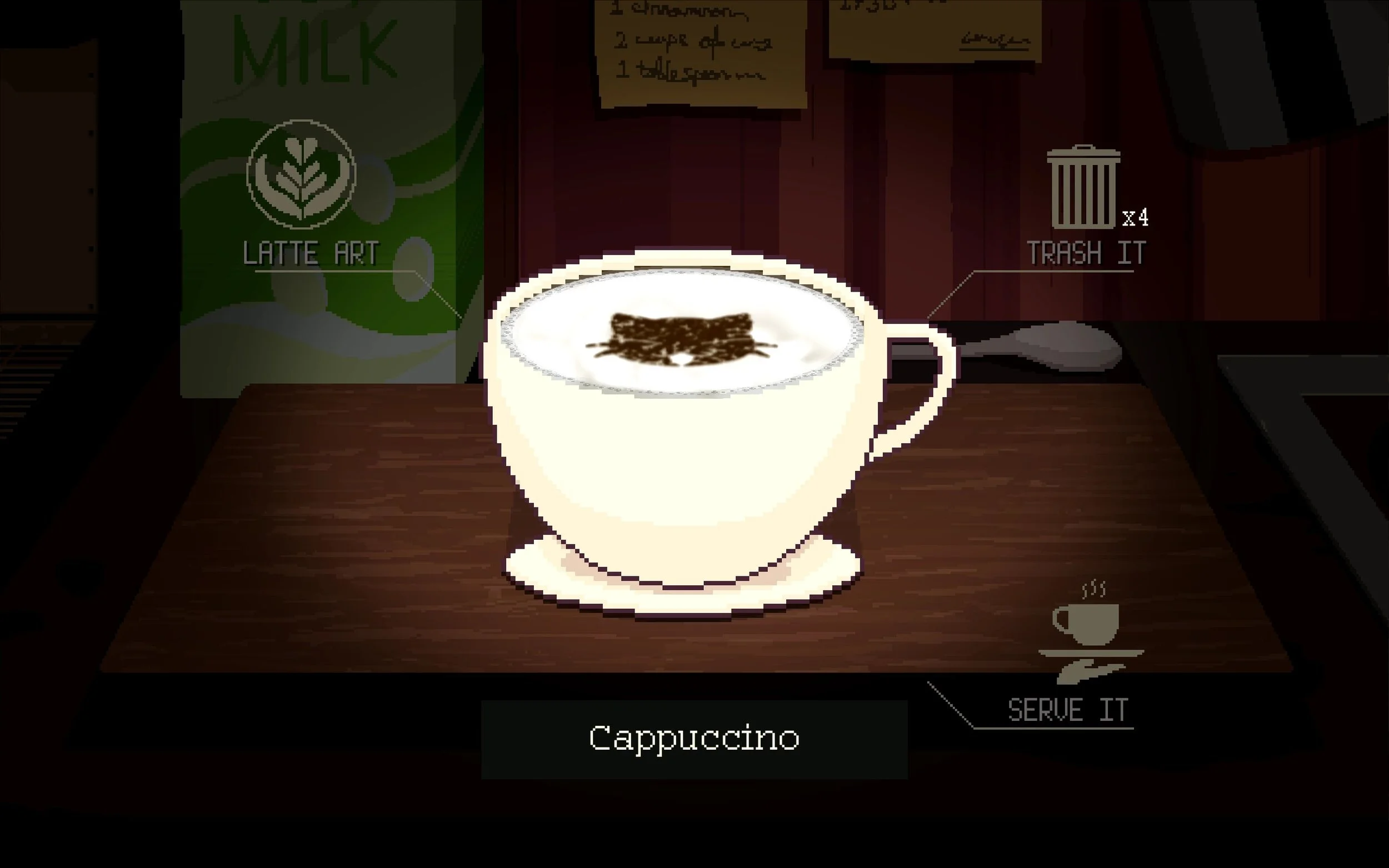
Image Credit: Toge Productions, Chorus Worldwide
The gameplay of Coffee Talk is very complimentary to its story and atmosphere. The chatter about your customer’s day will occasionally be broken up by them asking for a drink. Sometimes they ask for a specific drink, and sometimes they make their order based on vibes and leave you to figure out what combination of ingredients to use to make the drink they are thinking of. If you serve the customers the correct drinks, you will get the best endings to their stories. If you mess it up, you can affect them negatively. Whenever you make a special drink, your cup will usually have some level of presentational flair to it. The recipes for the special drinks also get saved in your drink app after you make them once.
Coffee Talk:Tokyo introduces a temperature toggle. So now on top of hot beverages you will end up serving iced drinks as well. The ingredient line up gets switched around this time. There’s a lot more options for fruit based drinks in this game. Yuzu, Mango, and Lychee all see some relatively frequent use in the drinks the customers ask for. You also have the ability to add whipped cream or ice cream to any given drink. Which arguably makes this game’s menu the coziest one yet.
One minor bit of criticism I have is with the social media browsing. I mentioned earlier that if you pay attention to some of the posts there you can catch cameos from the previous games and connect certain story threads before the game spells it out for you. That is a net positive. However, I think they could have curated the browsing a bit better. The thing that bogs down the pace if you are trying to be diligent is the Hashtag tab. There was more than one instance of me feeling like I was scrolling through a lot of the same threads in a slightly different font. It wasn’t anything horrible, but I thought it could use some condensing.
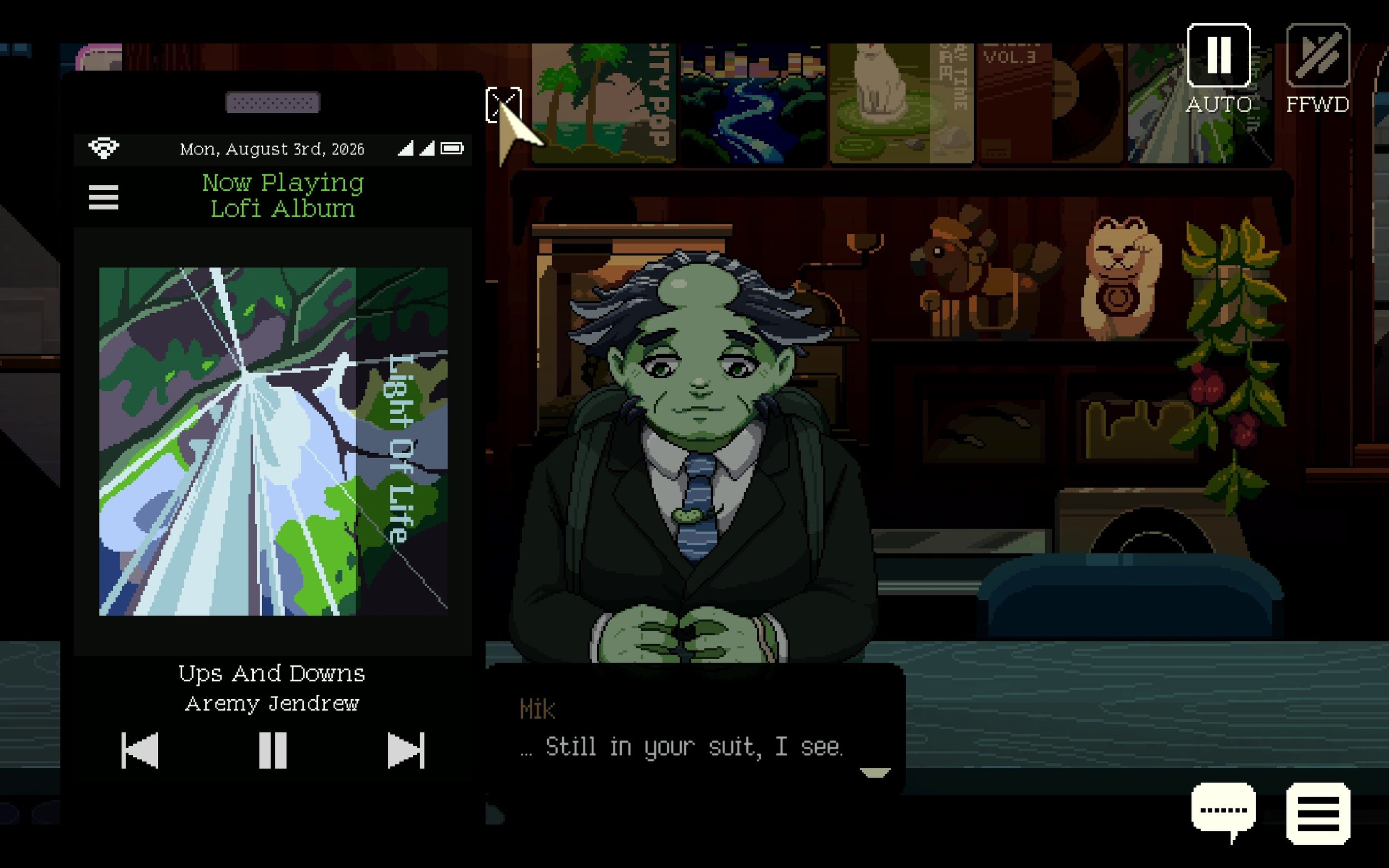
Image Credit: Toge Productions, Chorus Worldwide
The atmosphere of Coffee Talk: Tokyo is best described as comfy. The ambience of the Coffee Shop itself has been appropriately modified to give it a more Japanese flair. Decorations such as the daruma cat and the various hanging plants do well to give this coffee shop its own distinct vibe from the previous one.
I really enjoyed the music this time around as well. One of the first songs that plays in the coffee shop is a new version of Clair De Lune and I will never tire of hearing new versions of that. One of my other favorites was the slowed down version of Sweetheart Latte from the previous game. It was done in a way that was subtle enough that I didn’t catch it until the second time I heard it.
The character designs in this game are probably what set it apart from the previous two games the most. I really enjoyed the theming around Japanese folklore. Seeing this world’s take on the Kappa or Water Dragons was really interesting. I really liked Makoto as a take on the Noppera-bo. He is always seen with his prototype emote-goggles as a way to circumvent the fact that his face is featureless. Even Vin, who is just a regular human, is fairly striking from a visual standpoint. Overall I’d say my favorite designs in this game were Yuki, Alex, and Fuku. Yuki’s ice theming makes her seem appropriately dignified and distant. Alex looks like what would happen if Ganondorf was normal, and Fuku looks like her character concept could have been the protagonist of an artfully depressing indie hit in another timeline.
Image Credit: Toge Productions, Chorus Worldwide
Summary
Coffee Talk: Tokyo is an easy recommendation if you like comforting narrative driven games. The gameplay of making drinks for your clients is complimentary to the stories that they are telling you. The new setting provides a cool change of pace. It also does a great job at making the world feel larger without losing the intimate vibe that makes these games so appealing in the first place. The atmosphere provides a great backdrop for the stories of these characters that are the perfect blend of fun and poignant.