
Saros Review
“If Death is Welcome Let Him Seek it There” Written by: Hunter (@ReaperHunter23)
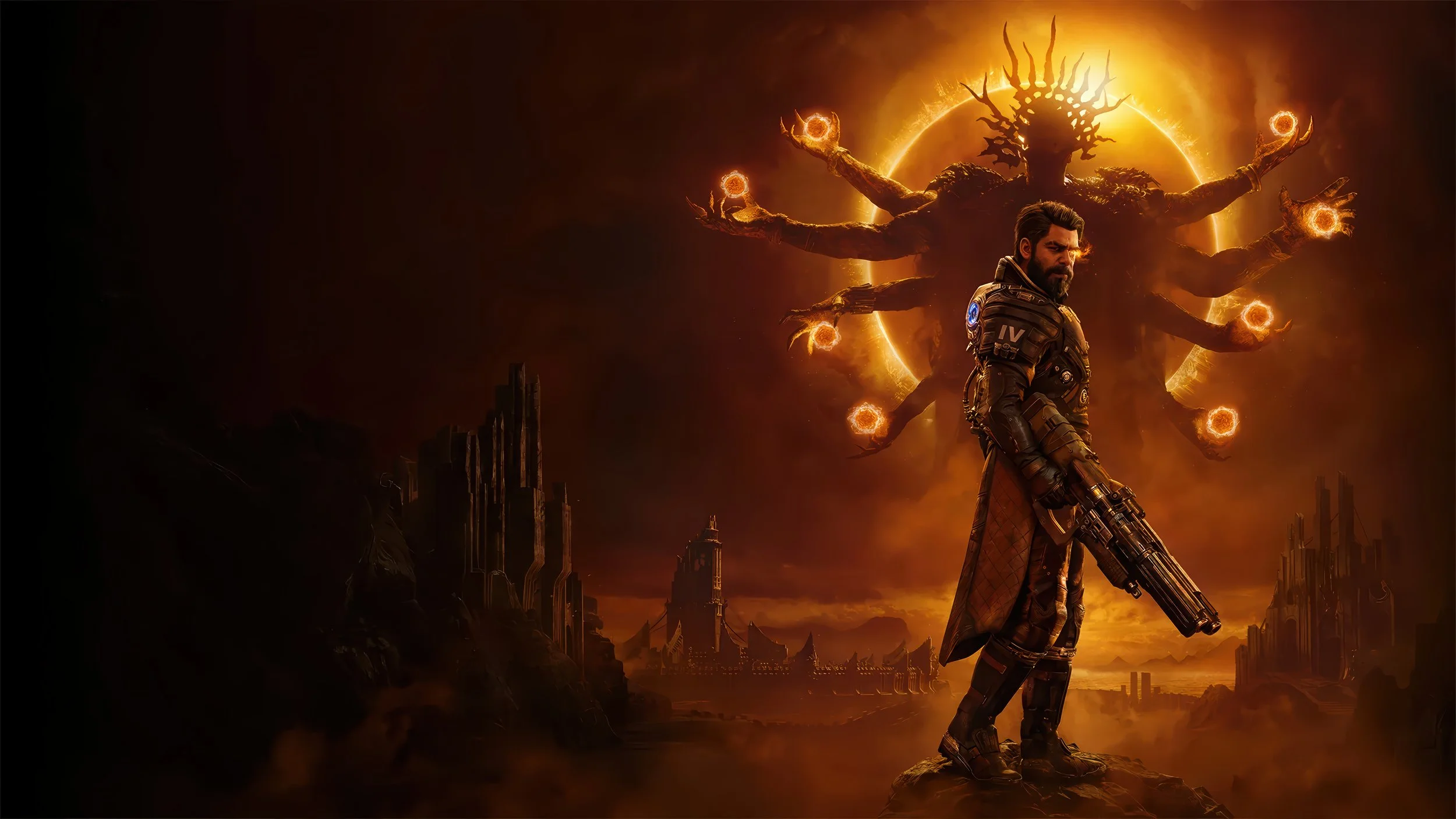
It has been five years since Housemarque captivated us with Selene’s sisyphean journey through Atropos. Returnal set a bar that very few of Playstation’s games have been able to meet during this console generation. This made the announcement of Saros last year a delightful surprise. This time around the game centers on Arjun Devraj trying to navigate the shifting world of Carcosa and its psyche altering eclipses. There were a few things in the promotional material for the game that piqued my interest. For starters, the “Come back stronger” gameplay philosophy was enticing. It seemed to be staying true to what made Returnal good while still offering a change of pace. The element that truly got my attention was the setting. I rather enjoy cosmic horror literature , so having a game that I was already interested in pull from The King In Yellow is like the icing on what is an already pretty excellent cake. Well the wait is over so let’s take a look to see if Housemarque was able to come back stronger for their second cycle on the Playstation 5.
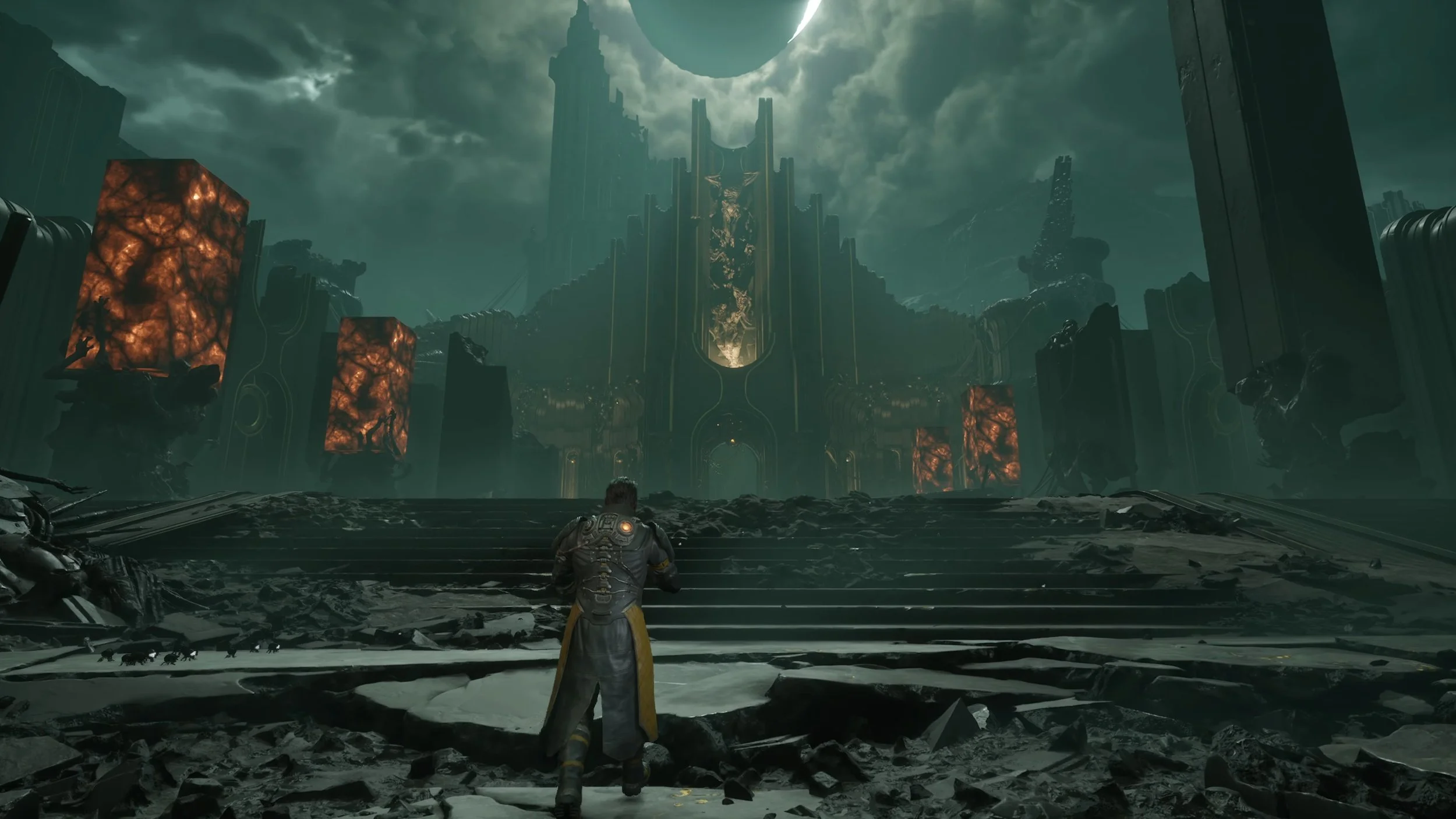
Image Credit: Housemarque, Playstation
Saros follows the story of Arjun Devraj. Arjun is part of the Echelon IV crew stranded on Carcosa, a hostile and constantly shifting planet. The Echelon IV was sent to locate any potential survivors of the previous three Echelon crews who fell out of contact upon arriving at Carcosa. The crew of the Echelon IV is down to its last few members and everyone seems to be on the brink of losing their minds. Arjun has his own reasons for accepting the mission. He has history with Nitya, one of the Echelon 1 crew members.
The tone of Saros is fairly different from Returnal. Rather than being a lonely descent into madness, it is more paranoia from external sources this time. Even though characters like Kayla and Sheridan seem to have their heads on straight back at the base, you can find a number of text and audio logs from the perspective of other crew members that have gone crazy. Even the computer in Arjun’s suit loses its mind and starts talking crazy during the eclipse.
The broader scope of Saros also provides a more zoomed out picture of the world. If you pay attention you can get a pretty decent idea of what life on Earth is like in Saros. It is not pretty. All of these Echelon expeditions were sponsored by a company called Soltari in the name of extracting resources from Carcosa. The only reason additional crews were sent to find the Echelon 1 was because Soltari wanted a return on their investment, rather than wanting to rescue their workers. The cold hands of capitalism are all over this story in a number of ways. One of the most prominent being Primary, the mission control computer. Before an Echelon crew makes any big decisions they usually have to confer with Primary, who then runs the cost/benefit analysis strictly though the lens of Soltari’s business margins. Honestly if Earth has this company as a dominant driving force, losing my mind on Carcosa might seem like a mercy.
Saros is an interesting one when it comes to the characters of the story. Arjun himself is very compelling as a protagonist. The fact that the game illustrates that there is clearly something off about him early made me intrigued to learn more about him as the story progressed. They also did a fairly good job at fleshing out what Nitya was like during Echelon 1’s stay on Carcosa. I feel like the rest of the cast could have been better utilized. Everyone else feels like pieces on a board rather than someone I was genuinely invested in. They set up Stack as this character has been touched by the Carcosan influence but carries themself in an almost zen-like manner for a lot of the time. Sheridan and Kayla both have some text logs that do a good job at fleshing out their motivations and headspace but it feels like they don’t really get to go anywhere with it. At the end of the day I still enjoyed the story on the strength of the two most important characters, but I do think the supporting cast could have been bolstered a bit better.
If Returnal was about being trapped in a prison of guilt and grief; I think Saros is about feeling trapped by external forces, be it other people in your life or society at large. Rather than guilt and grief, I would say that the main themes of Saros are denial and accountability. The madness is more a societal symptom than something of your own making. And in turn may lead to you causing the madness of others. There’s also a fairly engaging theme on the nature of corruption and its numerous causes, be it unchecked power or overwhelming desires.
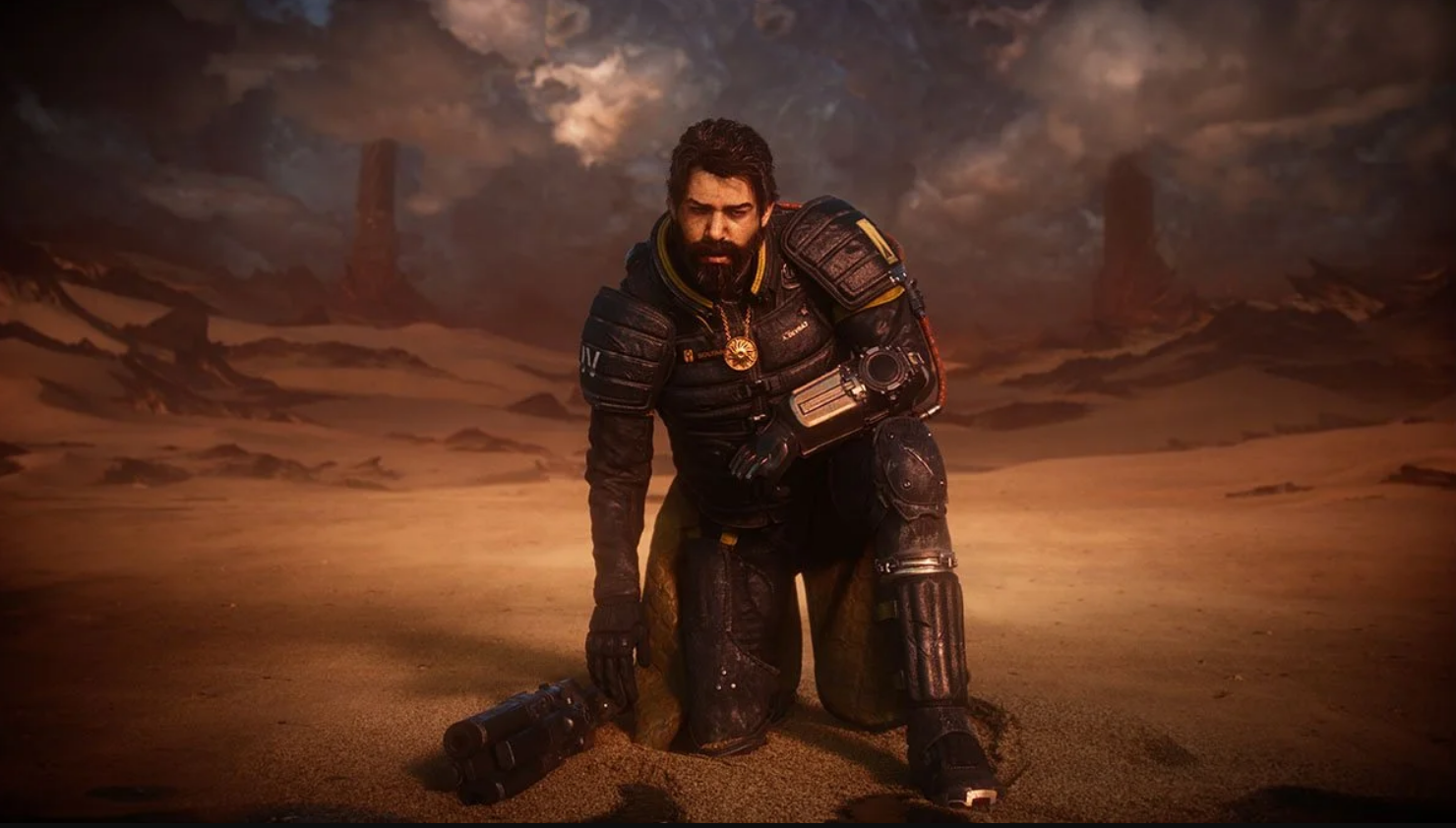
Image Credit: Housemarque, Playstation
Saros is exceedingly satisfying when it comes to gameplay. All of the high octane action you would expect from Housmarque is here. On the whole, everything I liked about the moment to moment gameplay of Returnal is present in Saros. Things like the artifacts and the parasites return under a different name and can still make for some pretty interesting set ups. I will say that it felt more like I was just picking whatever they gave me this time around rather than making the deliberate choice to leave something behind. There are a handful of distinct changes that really put me in a different headspace while playing Saros though.
The first major difference that Saros brings to the table would be the permanent progression. When you are out on your runs the currency you bring back with you can be used to upgrade Arjun’s suit. These upgrades range anywhere from a standard plus 1 to your total health bar to something more extravagant like a second chance if you die. Usually the really nice upgrades need a different rare currency to get. This upgrade tree is also massive. They section it off by boss encounters but if you progress through the game with a minimum of fuss you will not see the last couple of segments until well after you have finished the story. This progression system certainly did make my time with Saros an easier one than my time with Returnal. I’m not going to knock the game for that because I chose to engage with the system. That being said, I would like to do an attempt at a no upgrades playthrough some time in the future.
Carcosan modifiers are the other big addition to the game system wise. This lets you enable various adjustments to the way the game interacts with you. There’s a spectrum of acceptability that it lets you play in. I really like that it lets you choose the methods of give and take. Its like choosing what parasites to use but on a more macro level. For example : Anytime I got to a new biome I would usually do my first attempt without the modifiers one. I wanted the baseline, free range, non GMO Carcosa experience. But when I would turn on the modifiers I would always choose: Maximum corruption boost for the enemies and then a maximum damage boost for me. I was there for a good time, not a long time. The fight was going to be done in 15 seconds and I sure hoped that I was the winner.
There’s a fair number of tweaks and changes in the moment to moment gameplay. Arjun has a couple of new tricks up his sleeve. For starters, he has a shield. This can be used to block incoming projectiles and fill your power meter. The power meter is used for using power weapons. Power weapons are these wacky left arm attacks. One is a blast, another is a swarm of bullets, and eventually you also get a laser beam. My favorite was the bullet swarm. Outside of whatever damage they might do to the enemies, the power weapons also serve the purpose of healing any corruption damage you may have incurred. Corruption is a debuff that restricts your maximum health bar and can get pretty gnarly if it goes unchecked.
The Carcosan Eclipse is something that happens in each biome. Pretty at around the halfway mark, you enter what is essentially the double or nothing round of the level. Enemies hit harder but they drop more lucinite. Artifacts now have drawbacks, but the buffs are better than the non eclipsed artifacts. It's a cool enough mechanic. I found that I enjoyed it the most in the biomes that would throw it right at the start and give you the option of keeping it half and half, or go to the eclipse straight away.
The gunplay has been refined to be even more satisfying than Returnal’s. One thing that stood out to me was that the shotgun felt much better to use in this game. I really enjoyed the weirder weapons you find later in the game. The repeater crossbow and the ripsaw chakram were my top two weapons by the end of the game. All of the weapon traits and artifact buffs have the potential to gel really well together. I was able to achieve a pretty solid vampiric type of set up pretty often which would help balance out the glass cannon set up I would have with the Carcosan modifiers.
The flow of Saros is more segmented than I was expecting it to be. More often than not, the story would conjure up a reason for you to return to the base after defeating a boss. There are a few instances where the game does let you go from finishing one biome right into the new one and those were honestly the stretches where I was having the most fun. In fact during my time unlocking the true ending, I just did the Carcosa world tour and started from biome one and ran from goal to goal instead of using the teleporter.
Honestly this change in flow might be the biggest shift from Returnal aside from the permanent upgrade system. You see, because you are sent back at the end of most biomes, Saros isn’t nearly as much of a war of attrition. In fact, I would argue that my experience doing the longer runs in the post game made it feel like the game favored me more the longer the run went on. And because no run ever really felt like I was in it for the long haul, I found myself just kind of going for it more. I would pick up artifacts with gnarly drawbacks more often,I would activate the eclipse as soon as possible, I would do the Nightmare Strand even when I hadn’t spent my second chance yet. If I lost it didn’t really matter because I was realistically only being set back ten or so minutes. I don’t think this difference is necessarily better or worse, just a pretty noticeable change in flavor. I think a decent point of comparison would be how I played Doom: Eternal as opposed to how I played Doom: The Dark Ages. I had to stay dialed in for the most part in one and in the other I was able to be much more free flowing with how I played.
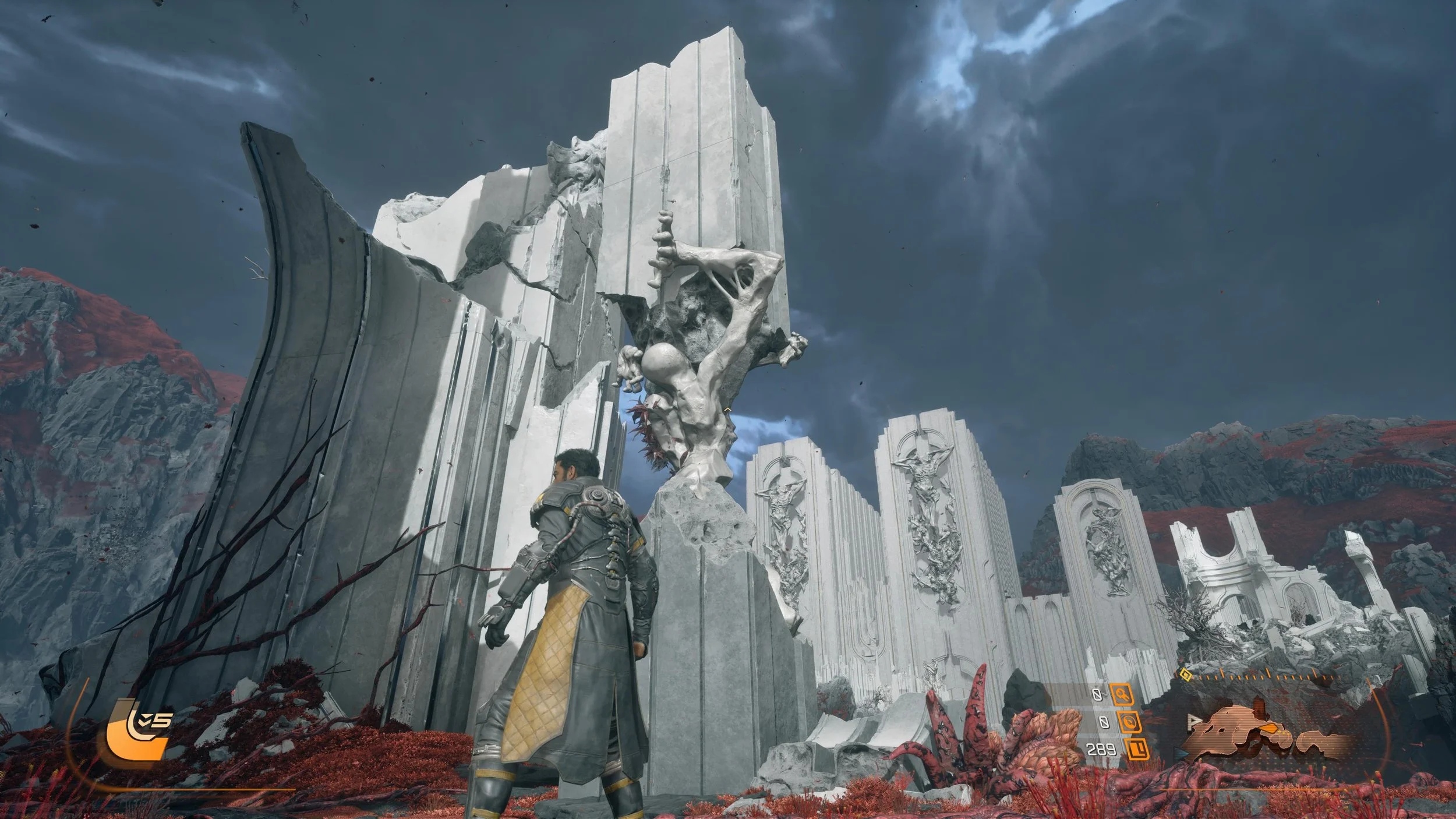
Image Credit: Housemarque, Playstation
Saros is a stunning game. I thoroughly enjoy it from an art direction standpoint. The environmental designs in this game are fantastic. I think one of the first things that stood out to me was the look of the first biome. The Shattered Rise has a color scheme that is predominantly red and white. I found this to be a cool change of pace because in a lot of games like this a predominantly red color scheme on a hostile alien planet leads to it looking like a typical fire and brimstone type of affair more often than not. The Carcosan eclipse also provides a cool change of pace visually. I like that it affects each biome in different ways. In the first biome it casts everything in an orange glow, but in biome three the sky takes on a more purple hue.
The boss battles in this game were out of this world when it came to how they were presented. Each one was this grandiose spectacle that upped that ante from the one previous. It truly elevated the whole experience to match the intensity of the gameplay that comes with each battle. I liked the visual design of the enemies in general. Most of them would look one of two ways. They would either be: A crazy alien creature of unknowable terror. Or they would be a creature that looked like it was deliberately made for existence to be pain. I can see the merrit of both approaches.
The audio design in Saros is also top notch. It does a really good job at believable ambient noise. There were a few times that the chatter on the pause menu made me think there was something happening in the other room. The haptic voodoo on the Dualsense controller enhances this too. Very often in this game the haptics will match some manner of sound happening in the world.
The performances in this game are all pretty stellar. Obviously Rahul Kohli gets the most time to shine as Arjun. But oh man what a performance it is. All of the audio logs are really excellently performed too. It really sold this feeling of tension whenever Arjun was interacting with anyone else. One of my other favorite performances in the game is the voice of Arjun’s suit wigging out during the eclipse. Absolutely haunting.

Image Credit: Housemarque, Playstation
Summary
Saros delivers some of the most pulse pounding action you can get from a third person shooter. I would certainly say that it is a must play if you like action games or shooters specifically. Housemarque’s high octane action is perfectly elevated by the gob smacking boss battles and complimented by the harsh paranoia fueled story that is all wrapped in an exquisite art direction. All of these elements work together to make Saros one of the best games I’ve played in recent memory.